

Gönderiler
Herkesin ne yaptığını ve ne düşündüğünü gör

Gönderiler
-
-
-
-
-
-
-
-
-
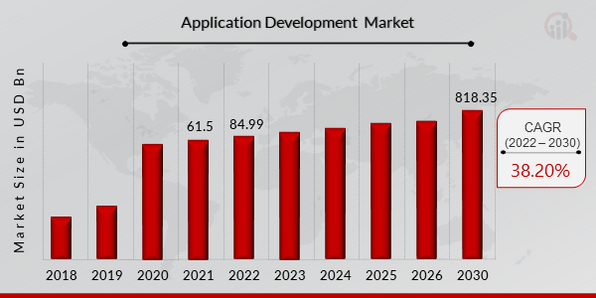
The Application Development Market has undergone a profound transformation over the past two decades, driven by rapid technological advancement, changing user expectations, and the growing reliance of businesses on digital platforms. Early application development focused primarily on standalone desktop software with limited connectivity and basic user interfaces. Over time, the rise of the internet, mobile devices, and cloud computing reshaped development priorities, pushing developers to create applications that are scalable, interactive, and accessible across multiple platforms.
Modern application development emphasizes agility and speed. Organizations increasingly adopt agile and DevOps methodologies to shorten development cycles and enable continuous improvement. These approaches encourage collaboration between development and operations teams, allowing faster deployment of features and quicker resolution of issues. As a result, applications evolve continuously rather than being released as static products, aligning more closely with changing business needs and user feedback.
The growing popularity of mobile devices significantly influenced development practices. Mobile-first and responsive design principles emerged to ensure applications function seamlessly across smartphones, tablets, and desktops. Developers now focus heavily on user experience, performance optimization, and intuitive interfaces. This shift has elevated design thinking as a core component of development rather than a secondary consideration.
Cloud computing further revolutionized application development by enabling flexible infrastructure and on-demand resources. Developers can now build applications without worrying extensively about underlying hardware limitations. Cloud-native architectures, including microservices and containerization, allow applications to scale efficiently and remain resilient under fluctuating demand. This architectural evolution has become central to modern development strategies.
Security has also become a fundamental concern in application development. As applications handle increasing volumes of sensitive data, developers must integrate security measures throughout the development lifecycle. Secure coding practices, regular testing, and compliance with data protection regulations are now standard expectations rather than optional enhancements.
Looking ahead, application development continues to evolve alongside emerging technologies such as artificial intelligence, automation, and low-code platforms. These innovations aim to simplify development processes, enhance application intelligence, and enable faster delivery. The evolution of application development reflects a broader shift toward digital-first business models, ensuring applications remain critical assets in organizational growth and competitiveness.@https://www.marketresearchfuture.com/reports/application-development-market-5400101 Görüntülenme -
Micro Turbine Market: Distributed and Decentralized Power Generation
https://www.marketresearchfuture.com/reports/micro-turbine-market-4099
As per Market Research Future, the Micro Turbine Market
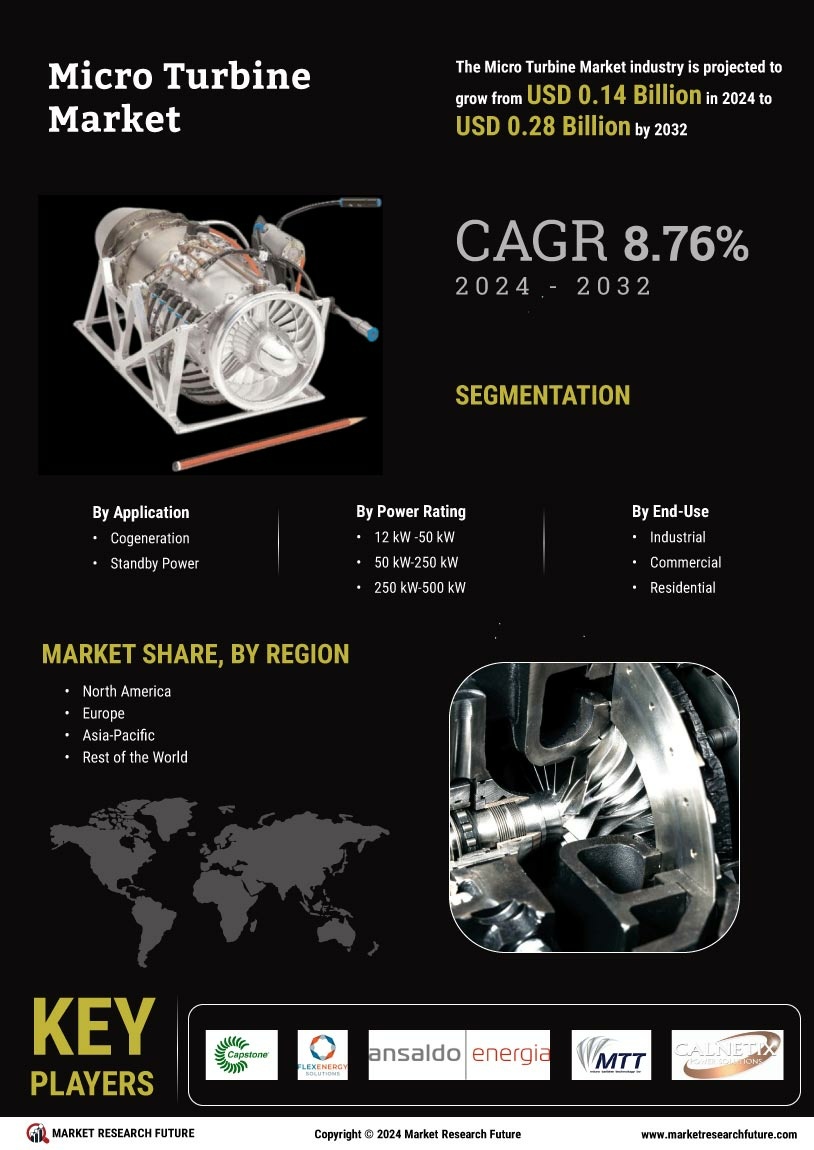
is gaining notable momentum as industries and utilities increasingly seek compact, efficient, and low-emission power generation solutions. Micro turbines are small-scale gas turbines, typically ranging from tens of kilowatts up to a few hundred kilowatts, designed to generate electricity and, in many cases, combined heat and power (CHP). Their ability to deliver reliable energy with lower maintenance requirements makes them an attractive option across commercial, industrial, and distributed energy applications.
One of the key drivers of the micro turbine market is the global push toward decentralized and resilient energy systems. Unlike conventional power generation, micro turbines can be deployed close to the point of consumption, reducing transmission losses and improving overall energy efficiency. This feature is especially valuable for remote locations, data centers, hospitals, manufacturing facilities, and commercial buildings where uninterrupted power supply is critical. In addition, their compatibility with CHP systems allows users to utilize waste heat for heating or cooling, significantly enhancing total system efficiency.
Environmental considerations are also playing a major role in shaping market growth. Micro turbines generally produce lower levels of nitrogen oxides and other harmful emissions compared to traditional combustion-based generators. Many models are capable of operating on a variety of fuels, including natural gas, biogas, landfill gas, and other renewable or low-carbon fuels. This fuel flexibility aligns well with global sustainability goals and government initiatives aimed at reducing carbon footprints while maintaining reliable energy access.
Technological advancements have further strengthened the appeal of micro turbines. Improvements in materials, aerodynamics, and digital control systems have led to higher efficiency, improved durability, and better performance monitoring. Modern micro turbines often feature fewer moving parts than reciprocating engines, which translates into reduced vibration, quieter operation, and lower maintenance costs over the equipment lifecycle. These advantages make them suitable for urban and noise-sensitive environments.
From an application perspective, the micro turbine market serves a diverse range of sectors. In the commercial sector, micro turbines are widely used in office buildings, hotels, and shopping complexes to support CHP installations and reduce energy expenses. Industrial users leverage these systems for process heat and power generation, particularly in oil and gas facilities, food processing plants, and chemical industries. Additionally, utilities and energy service companies are adopting micro turbines as part of microgrids to enhance grid stability and support renewable energy integration.
FAQs
1. What is a micro turbine and how does it work?
A micro turbine is a small gas turbine that generates electricity by compressing air, mixing it with fuel, and igniting the mixture to spin a turbine. The turbine drives a generator to produce power, and waste heat can be recovered for heating or cooling applications.
2. What are the main benefits of micro turbines?
Key benefits include high reliability, low emissions, fuel flexibility, compact design, and the ability to support combined heat and power systems, resulting in improved overall energy efficiency.
3. Which industries commonly use micro turbines?
Micro turbines are commonly used in commercial buildings, industrial facilities, oil and gas operations, data centers, hospitals, and distributed energy systems such as microgrids.107 Görüntülenme


© 2026 WeCanna Social


